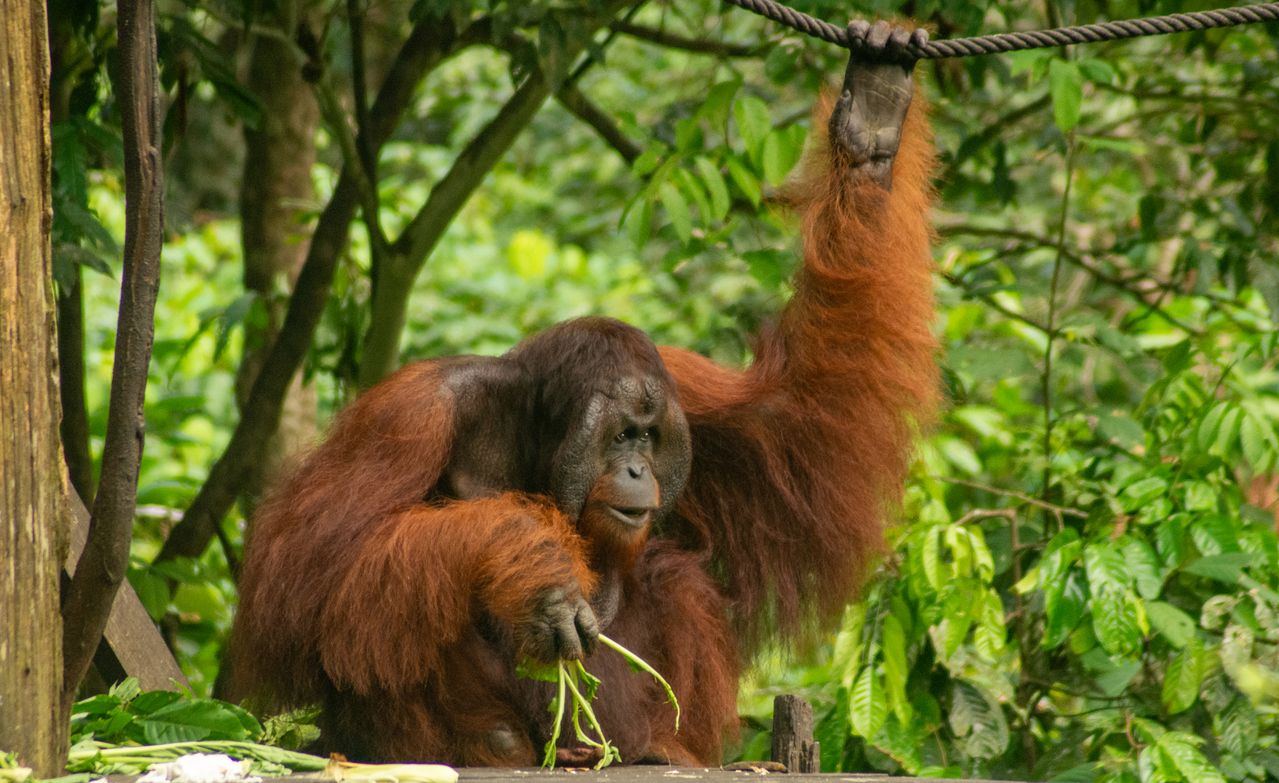

The Sepilok Orangutan Rehabilitation Centre has been taking in orphaned and displaced orangutans since 1964, and it remains the easiest place in Borneo to see them up close. The centre sits on the edge of the Kabili-Sepilok Forest Reserve, about 25 km west of Sandakan, and is run by the Sabah Wildlife Department. Young orangutans learn to climb, forage and build nests here before being released into the surrounding forest, so the animals you see at a Sepilok orangutan feeding are semi-wild and free to come and go.
That freedom is the point. On some days a dozen orangutans swing in along the ropes; on others, especially when wild fruit is plentiful, only one or two show up. Rangers treat a quiet platform as a sign the rehabilitation is working.
What to see at the Sepilok orangutan centre
The feeding platform
A raised boardwalk leads through the forest to the main feeding platform, where rangers put out bananas, sugarcane and milk at 10am and 3pm. Arrive at least 15 minutes early: the walk takes a few minutes, the best viewing spots along the rail fill quickly, and late arrivals may find the session already over. Macaques often join in, and the occasional pig-tailed macaque raid is part of the show.
The outdoor nursery
The outdoor nursery is where the youngest orangutans practise their climbing skills. You watch from an air-conditioned building through large glass windows, which keeps human germs away from the animals and makes for clear photos. The nursery is often quieter once the morning feeding crowd has moved on, so it is worth going straight there after the 10am session.
Next door: sun bears and canopy walks
The Bornean Sun Bear Conservation Centre sits directly beside the orangutan centre and is easy to combine on the same visit. The Rainforest Discovery Centre, a short drive away, has a canopy walkway that is excellent for birdwatching early in the morning. Together the three make a full and rewarding day at Sepilok.
Feeding times, tickets and opening hours
At the time of writing the centre opens from 9am to 12pm and 2pm to 4pm most days, with a shorter morning on Fridays (9am to 11am). Foreign adults pay RM30 and children under 18 pay RM15, while Malaysians pay RM5 and RM2. Phones are free to use, but professional cameras, video cameras and GoPros carry an RM10 fee. Your ticket is valid all day, so you can watch the morning feeding, go for lunch and come back for the afternoon session. Bring cash, and check the latest details on the Sabah Wildlife Department website before you go.
How to get to Sepilok from Sandakan
Sepilok is about 40 minutes by road from central Sandakan and closer still to Sandakan Airport. Grab works well in both directions and is the simplest option. Local buses run along Jalan Labuk, but they drop you on the main road, leaving a fair walk to the entrance in the heat.
Plenty of travellers skip Sandakan town altogether and stay in one of the jungle lodges along the Sepilok access road, most within a kilometre of the centre. Waking up in the forest makes it easy to reach the 10am feeding without a rush, and lodges can usually arrange onward transfers.
Best time to visit
Sepilok is open year-round. The morning feeding is busier because tour groups arrive from Sandakan, while the 3pm session tends to be calmer, though afternoon showers are common. Fewer orangutans come to the platform during fruiting seasons in the forest, which vary from year to year, so if seeing them is your priority, plan to attend both feedings.
How Sepilok fits into a Sabah trip
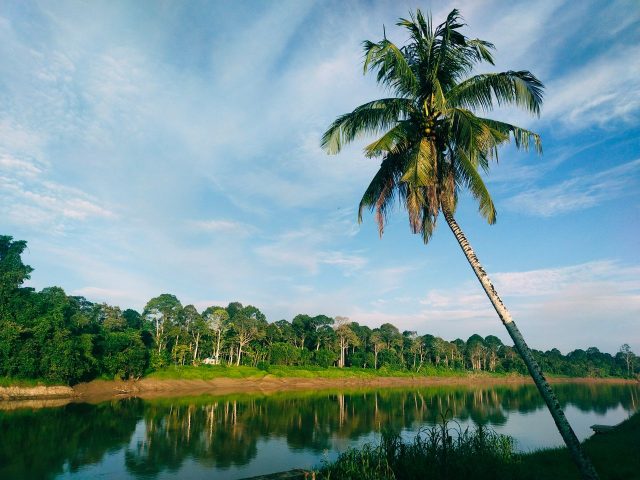
Most visitors spend one night at Sepilok, then continue by road to the Kinabatangan River for two or three nights of wildlife cruises. That pairing is the backbone of our Sabah 7-day itinerary, and it slots neatly into a longer 2-week Malaysia itinerary with Borneo. For the bigger picture, see our Sabah state guide.
Tips for visiting Sepilok Orangutan Centre
- Arrive by 9.45am for the morning feeding; there is no viewing once a session ends.
- Your ticket is valid all day, so keep it and return for the calmer 3pm feeding.
- Bring cash in ringgit, plus insect repellent and a light rain jacket.
- Never touch an orangutan, even one sitting on the boardwalk; they catch human illnesses easily.
- Leave bags you do not need at your lodge, as macaques will grab anything that looks like food.
- Visit the outdoor nursery straight after the 10am feeding, when the crowds thin out.
Sepilok Orangutan Centre: frequently asked questions
What are the feeding times at Sepilok Orangutan Centre?
Orangutans are fed twice a day at the main platform, at 10am and 3pm. Arrive at least 15 minutes early, as there is no viewing once the feeding ends. Attendance varies, and fewer orangutans come when there is plenty of wild fruit.
How much is the Sepilok entrance fee?
At the time of writing, foreign adults pay RM30 and children under 18 pay RM15. Malaysians pay RM5 for adults and RM2 for children. Professional cameras cost an extra RM10, and tickets are valid for the whole day.
Is Sepilok Orangutan Centre open on Fridays?
Yes, but the morning session is shorter on Fridays, running from 9am to 11am before the midday break. The afternoon session from 2pm to 4pm runs as normal, including the 3pm feeding.
Can you see Sepilok and the Sun Bear Centre on the same day?
Yes. The Bornean Sun Bear Conservation Centre is right beside the orangutan centre, so you can walk between them. Many visitors watch the 10am feeding, visit the sun bears, have lunch and return for the 3pm feeding.
Are you guaranteed to see orangutans at Sepilok?
No. The orangutans are semi-wild and choose whether to visit the platform. Sightings are very likely at most feedings, but numbers drop when fruit is abundant in the forest, so attending both sessions improves your chances.
How do I get from Sandakan to Sepilok?
Sepilok is about 25 km west of Sandakan, roughly 40 minutes by car. Grab is the easiest option. Local buses stop on the main road, which leaves a long walk to the entrance.
Itineraries that include Sepilok Orangutan Centre
-
 14 days
Malaysia 2-Week Itinerary with Borneo
Travellers with a fortnight who want the peninsula's food and heritage plus a beach break, then Borneo's islands…
-
 7 days
Sabah 7-Day Itinerary: Kinabalu, Wildlife and Islands
For nature lovers and first-time visitors to Borneo who want mountains, rainforest wildlife and tropical islands in…