Thean Hou Temple Kuala Lumpur: Visitor Guide

Thean Hou Temple rises above the Robson Heights area of Kuala Lumpur, a six-tiered sweep of red pillars, curved roofs and rows of red lanterns. Completed in 1987 and officially opened in 1989, it was built by the city’s Hainanese community and is run by the Selangor and Federal Territory Hainan Association. It is one of the largest Chinese temples in Southeast Asia, and one of the most photogenic places in KL.
What to see at Thean Hou Temple
The main prayer hall sits on the upper level. Three altars face you: Tian Hou (also known as Mazu), the sea goddess and protector of seafarers, in the centre; Guan Yin, the Goddess of Mercy, on the right; and Shui Wei Sheng Niang, the Goddess of the Waterfront, on the left. The ceiling and beams are richly painted, and incense smoke drifts across the hall through the day.
Walk the outer terraces for the views. From the top you look north over the city towards the skyline, and the lanterns strung overhead frame the shot. In the grounds below you will find statues of the 12 Chinese zodiac animals, a statue of Yue Lao (the god of matchmaking), a wishing well, a herb garden and a tortoise pond. Visitors can also try kau cim, the shaking of numbered bamboo sticks to receive a fortune.
Opening hours and entry
The temple opens daily from 8am to 10pm and entry is free. It is an active place of worship, so dress respectfully, keep your voice down in the prayer hall and avoid stepping in front of anyone praying. There is a canteen and souvenir stalls on the lower level.
How to get there
The temple stands at 65 Persiaran Endah, off Jalan Syed Putra, close to Mid Valley Megamall. Grab is the simplest option and takes around 10 to 15 minutes from KL Sentral or Chinatown, depending on traffic. You can also take a train to Mid Valley or KL Sentral and continue by Grab, as the final approach is uphill along busy roads.
Best time to visit
Late afternoon is best: the heat eases, the light softens and the lanterns glow once darkness falls. Chinese New Year is spectacular, with thousands of extra lanterns, but crowds are huge. Wesak Day and the Mid-Autumn Festival are also busy.
How it fits your trip
Thean Hou is an easy add-on to a day in Brickfields or a shopping trip to Mid Valley. It pairs well with Batu Caves if you want to see two of the city’s great places of worship, and it suits the second day of our 3-day Kuala Lumpur itinerary. Families on our Malaysia family itinerary will find children enjoy spotting their zodiac animal in the garden.
Tips for visiting Thean Hou Temple
- Arrive around 5pm to see the temple in daylight and stay for the lanterns after dark.
- Take Grab rather than walking from the station; the approach is uphill beside busy roads.
- Cover shoulders and avoid very short shorts in the prayer hall.
- Do not take photos of worshippers at close range or stand in front of the altars while people pray.
- Expect heavy crowds and traffic around Chinese New Year; go early in the day if visiting then.
Thean Hou Temple: frequently asked questions
Is Thean Hou Temple free to enter?
Yes, entry to Thean Hou Temple is free. Donations are welcome, and the temple also offers services such as fortune-telling and marriage registration.
What are Thean Hou Temple opening hours?
The temple opens daily from 8am to 10pm. Late afternoon into early evening is the most atmospheric time, when the lanterns light up.
How do I get to Thean Hou Temple from KL Sentral?
The quickest way is a Grab ride of around 10 to 15 minutes, depending on traffic. The temple is on a hill off Jalan Syed Putra, and walking from the nearest stations means climbing along busy roads.
Is there a dress code at Thean Hou Temple?
There is no formal dress code, but it is an active temple. Wear clothing that covers your shoulders and knees, and behave quietly in the prayer hall.
When is the best time to visit Thean Hou Temple?
Visit in the late afternoon for softer light and stay until dusk to see the lanterns glow. Chinese New Year is the most colourful time, but also the most crowded.
More things to do in Kuala Lumpur
-
Kuala Lumpur
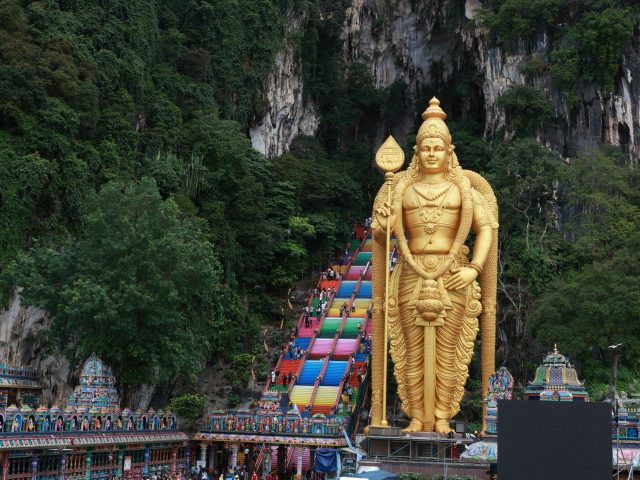
Batu Caves
Batu Caves is a Hindu temple complex in a limestone hill 13km north of Kuala Lumpur, reached by 272 painted steps.
-
Kuala Lumpur
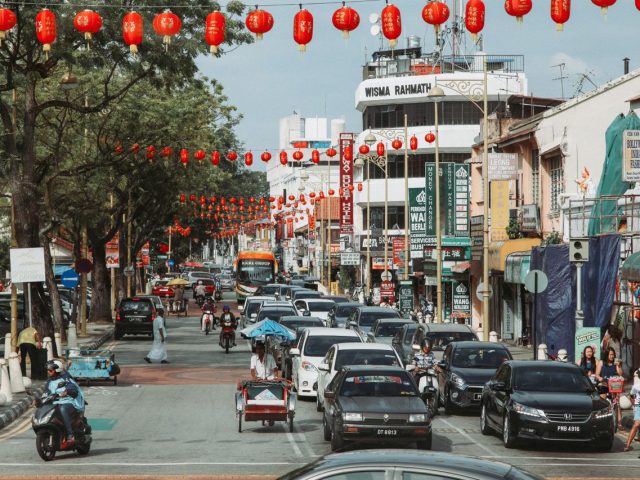
Jalan Alor Food Street
Jalan Alor is Kuala Lumpur's best-known food street, a strip of open-air restaurants and hawker stalls in Bukit…
-
Kuala Lumpur
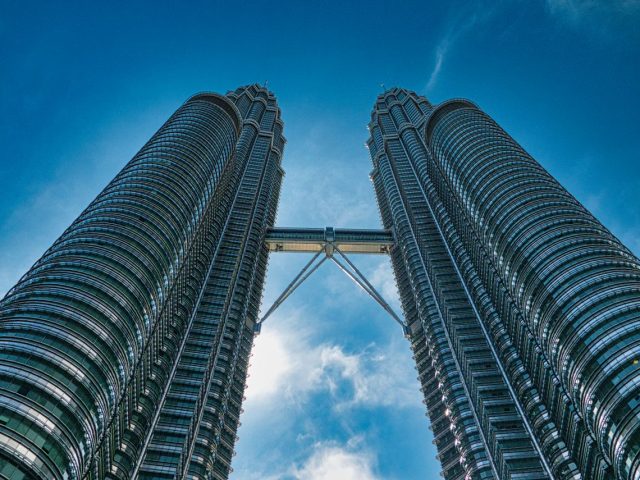
Petronas Twin Towers
The Petronas Twin Towers are KL's 452-metre twin skyscrapers, with a Skybridge on Level 41 and an observation deck on…
-
Kuala Lumpur
Aquaria KLCC
Aquaria KLCC is a two-level aquarium under the KL Convention Centre, a short walk from the Petronas Twin Towers.
-
Kuala Lumpur
KL Bird Park
KL Bird Park is a large walk-through aviary beside the Perdana Botanical Gardens, home to more than 3,000 birds of…
-
Kuala Lumpur
KL Tower
KL Tower (Menara Kuala Lumpur) is a 421-metre telecoms tower on Bukit Nanas with an indoor Observation Deck and the…
-
Kuala Lumpur
Merdeka Square
Merdeka Square (Dataran Merdeka) is the open lawn in old Kuala Lumpur where the Union Flag was lowered at independence…
-
Kuala Lumpur
Islamic Arts Museum Malaysia
The Islamic Arts Museum Malaysia in Kuala Lumpur holds more than 7,000 objects across 12 galleries, from Qur'an…
Itineraries that include Thean Hou Temple
-
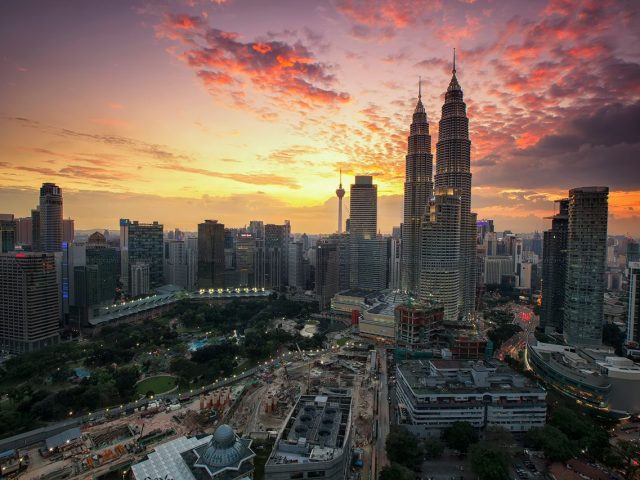 10 days
Malaysia 10-Day Itinerary: Cities, Highlands and Islands
First-timers and couples who want a balanced trip: a big city, cool highlands, a heritage food town and a few days on…
-
14 days
Malaysia 2-Week Itinerary with Borneo
Travellers with a fortnight who want the peninsula's food and heritage plus a beach break, then Borneo's islands…
-
3 days
3 Days in Kuala Lumpur: A First-Timer’s Itinerary
For first-time visitors who want KL's landmarks, food streets and temples in a well-paced three days, using trains and…